What “monobloc” actually means
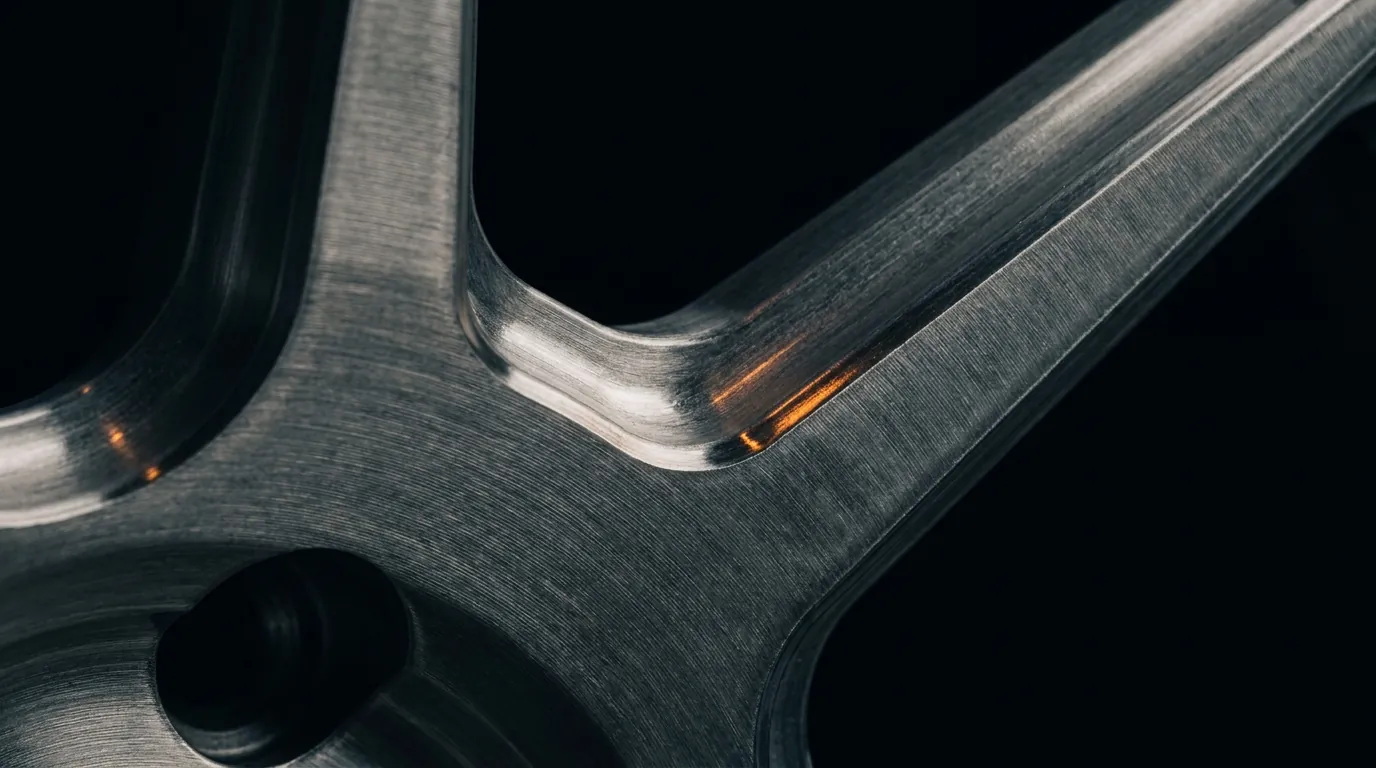
A monobloc caliper is machined from a single piece of forged aluminum — no joint between the two halves like a traditional two-piece caliper. That matters for two reasons.
Stiffness. No joint means no caliper spread under high pedal pressure. The pads stay parallel to the rotor, which means more consistent bite, more linear pedal feel, and better pad life because the pads wear evenly across their surface.
Weight. No joint means no extra material to bridge the joint and no extra hardware to clamp the halves together. The result is less unsprung mass per corner, which is exactly the kind of weight you want to take off a vehicle that is already heavier than it ought to be.
You pay more for monobloc construction. You also get a caliper that works the same way at lap thirty as it did at lap one.
Why forged matters too
Forged aluminum starts as a billet that gets hammered into shape under massive pressure. The grain structure of the metal aligns with the load paths the caliper will see in service. Cast aluminum, by contrast, has a more random grain structure that’s weaker in tension and more prone to cracking under thermal cycling.
Most cheap aftermarket calipers are cast. They look the part — six pistons, anodized red, the works — but they flex more than they should under hard braking, and they don’t handle repeated heat soak the way a forged body does.
Why we sourced the way we did
We tested calipers from several suppliers at the prototype stage. The one we picked won on three things:
- Pad shape availability. The pad footprint matches multiple OE applications, so when the customer needs fresh pads in three years, they aren’t locked to a single supplier — any pad maker that supports that footprint will fit.
- OE-grade tolerances. The same line that supplies our calipers also runs OEM contracts for European performance brands. The quality bar is set by automotive OEMs, not by an aftermarket spec sheet, and that gap is real.
- Service support. Replacement seals, dust boots, and pistons are stocked years out. Cheap calipers tend to disappear from the parts catalog within a few seasons.
What it costs
A forged monobloc caliper costs more than a comparable cast caliper from a generic vendor, and that cost shows up in the kit price. We think it’s worth it. Some buyers don’t. If you’re looking for the absolute cheapest BBK, we’re probably not the right shop.